How accurate is AI photo calorie tracking?
AI photo calorie tracking accuracy depends less on the camera than on what it cannot see. A photo is good at naming food and weaker at portions, oil and sauces. Here is when to trust the estimate and the ten-second check that makes it reliable.
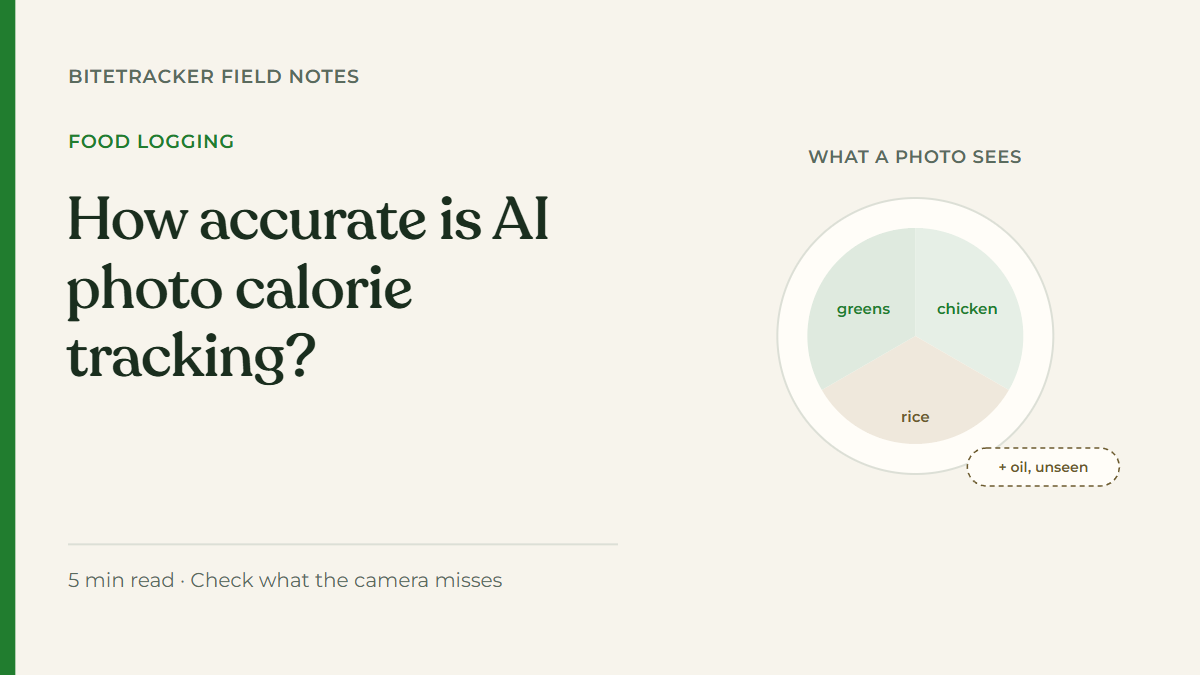
- Photo estimates are strongest at identifying foods and weakest at portion size, cooking oil and sauces.
- Check the largest portion and add anything the camera cannot see. That quick review removes most of the error.
- For packaged foods, a barcode scan beats a photo. For home cooking, a saved recipe beats both.
Snap it, then check two things
Photo logging is fastest when you treat the result as a draft you confirm, not an answer you accept.
Take a clear, top-down photo
Shoot from above in decent light with the whole plate in frame, before you start eating. A fork or your hand next to the plate helps with scale. Mixed dishes photographed at an angle in a dark restaurant are where estimates struggle most.
Check the biggest portion
Compare the suggested amounts with what you know: a fist is about a cup of rice or pasta, and a palm is about 3 to 4 ounces of cooked meat or fish. Adjusting the largest item takes a few seconds and fixes the biggest source of error.
Add what the camera missed
A photo cannot see the butter in the potatoes, the oil in the pan or the sugar in the drink. Add a line for cooking fat, dressing or sauce when you know it is there. That one extra entry often matters more than anything else on the plate.
How accurate is AI photo calorie tracking?
AI photo calorie tracking accuracy is usually good at identifying what is on the plate and less reliable at judging how much. For simple meals with separate, visible foods, a reviewed photo estimate is often close enough to use. Accuracy drops with mixed dishes, deep bowls, and oil, butter or sauce the camera cannot see.
In other words, the photo gets you most of the way and a quick review does the rest. The biggest errors are predictable, which means they are also easy to fix once you know where to look.
What photo logging does well
Modern photo recognition is good at the question most people find tedious: what is this? It can tell a burrito bowl from a salad, pick out the rice, beans and chicken, and match each to nutrition data. That saves you from searching a database item by item.
It is also fast. Snapping a photo takes less effort than typing, which makes you more likely to log at all. For most people, that consistency is worth more than a few percent of precision on any one meal.
- Works best: plated meals with separate foods, like grilled meat, rice and vegetables, or eggs and toast.
- Works well with a check: bowls, sandwiches, salads and pizza, where portions or toppings need a quick look.
- Needs the most help: soups, curries, casseroles, smoothies and anything fried or in a creamy sauce.
What affects AI photo calorie tracking accuracy?
A photo flattens a three-dimensional meal into two dimensions, and some calories are invisible. These are the usual sources of error, roughly in order of how much they matter.
- Hidden fats: oil, butter and cream cooked into food do not show in a photo, and each tablespoon of oil is about 120 calories.
- Portion depth: a deep bowl and a shallow plate can look the same from above.
- Sauces and dressings: easy to see, hard to measure, and dense in calories.
- Mixed dishes: casseroles, curries and stews hide their ingredients.
- Drinks: a latte and a flat white, or a regular and a diet soda, look almost identical.
- Lighting and angle: dark, angled photos make foods and portions harder to read.
How much can a missed portion or oil change the total?
Here is a worked example with a simple plate of chicken, rice and greens. Suppose the photo suggests 5 ounces of cooked chicken breast (about 235 calories), 1 cup of white rice (about 205) and a side of greens (about 20), for roughly 460 calories.
Now suppose the rice was really 1.5 cups and the chicken was cooked in a tablespoon of oil.
- Extra half cup of rice: about 100 calories.
- Tablespoon of cooking oil: about 120 calories.
- Corrected total: about 680 calories, nearly 50% more than the unreviewed estimate.
How to get a more accurate photo estimate
Most of the gain comes from the ten-second review, but a better photo helps too. Keep foods separated where you can, photograph the plate before anyone adds sauce at the table, and take a second photo of the label or menu if you have one.
Then treat the result as a draft. Confirm the foods, adjust the largest portion, and add any fat you know is there. Our guide to hidden calories in oils, sauces and drinks lists typical amounts, so you can add them without guessing from scratch. If you want better portion instincts, tracking macros without a food scale covers hand-size anchors.
When to use a barcode, recipe or description instead
Photos are one tool, not the only one. Choosing the right method for each food removes most of the guesswork before it starts.
- Packaged foods: scan the barcode. It pulls the label values directly, which no photo can match. It helps to know how to read a nutrition label, especially the serving size.
- Home cooking: build a saved recipe from its ingredients once, then log servings. See how to count calories in homemade food.
- Meals where you know the amounts: describe the meal in a sentence, including quantities.
- Restaurant plates: a photo plus a round-up for cooking fat works well. Our guide to tracking calories when eating out adds the restaurant-specific steps.
Is a photo estimate accurate enough to lose weight?
For most people, yes, as long as you review it and log consistently. Even careful weighing is not perfect, because food labels and databases carry some error of their own. Research on self-monitoring consistently links tracking what you eat with weight loss, and a system you use every day beats a precise one you abandon.
Check the estimates against your results. If your weekly average weight has not moved for 3 to 4 weeks while your log says you are in a deficit, look first at oils, sauces and portion sizes in your photo entries. In BiteTracker, snap a photo, review the suggested foods and portions, and save. The weekly report shows your average calories and a weight trend, so you can see whether the estimates add up.
Frequently asked questions
Can AI count calories from a picture?
Yes, roughly. AI can identify most foods in a clear photo and estimate portions from their size on the plate, then look up calories for each. It cannot see oil, butter or sugar cooked into food, and portion size is its weakest point, so a quick review of amounts makes the estimate far more useful.
Why does my photo calorie estimate seem too low?
The most common reasons are hidden cooking fat, a deeper bowl than the photo suggests, and sauces or dressings that were missed or underestimated. Add a separate line for oil or butter when you know food was cooked in it, and increase the largest portion if the plate was heaped.
Is photo calorie tracking better than manual logging?
It is usually faster, which makes it easier to log every meal. Both methods depend on getting portions right, and manual entry with weighed amounts is the most precise option for home cooking. Many people get the best balance by using photos for plates, barcodes for packaged food and saved recipes for meals they cook often.
Should I weigh my food instead of using photos?
A food scale is the most precise option at home, and a week or two of weighing is a good way to calibrate your eye. For restaurant meals and busy days, a reviewed photo estimate is more realistic. What matters most is logging consistently, so your weekly averages reflect what you actually eat.
Snap a meal and review it in BiteTracker
Take a photo, check the foods and portions BiteTracker suggests, and save. Scan a barcode instead whenever the food has a label.
Sources
- Self-monitoring in weight loss: a systematic review of the literature, Burke LE et al., Journal of the American Dietetic Association, 2011
- FoodData Central, U.S. Department of Agriculture
- How to Understand and Use the Nutrition Facts Label, U.S. Food and Drug Administration
This article is general information, not medical advice. If you have a health condition, talk to your doctor or a registered dietitian before changing how you eat.