The best calorie tracking apps in October 2026, compared
There is no single best calorie tracking app, but there is a best one for how you eat, what you track and what you want to pay. We compared 18 apps in October 2026 on price, logging and planning, including the one we make.

- For logging, meal planning and recipes in one app at a low price, BiteTracker is our pick: $42 a year with every feature included.
- For micronutrient detail, choose Cronometer. For adaptive targets, MacroFactor or Carbon Diet Coach. For the biggest food database, MyFitnessPal. For free logging on a Galaxy phone, Samsung Health.
- Check which plan you would actually need. Barcode scanning, photo logging and meal planning are paid extras in many apps.
Pick the app for the way you eat
Three questions narrow the field faster than any ranking.
Decide what you want to track
Calories and protein only, full macros, or dozens of vitamins and minerals. Most people need the first two; only a few need the third.
Decide how you want to log
Photos and sentences, barcode scans, or searching a database. Then check whether those methods are in the free tier or in the plan you would pay for.
Decide whether you want planning
If you plan meals and shop for them, an app with a meal calendar saves the most time. Many apps charge extra for planning, and only a couple turn the plan into a grocery order.
What is the best calorie tracking app?
The best calorie tracking app is the one you will still be using in three months, which depends on how you log, what you want to track and what you want to pay. As of October 2026, for most people who want fast logging, meal planning and recipes in one place without paying for several tiers, we recommend BiteTracker. If micronutrient detail matters most, Cronometer is stronger. If you want your targets adjusted for you every week, look at MacroFactor or Carbon Diet Coach.
A note on fairness: we make BiteTracker, so we are not neutral. To keep this useful, every price and feature listed for another app comes from its own website, help center or US App Store listing, checked on October 1, 2026. Prices are US list prices before promotions, and they change, so confirm them before you subscribe.
Our picks for October 2026
Each of these is the best choice for someone. Prices are for the plan you would need to get the feature that earns the pick.
- Best value for logging, planning and cooking in one app: BiteTracker, $42 a year.
- Best for micronutrients: Cronometer, free, or $59.99 a year for Gold.
- Best for adaptive calorie targets: MacroFactor, $71.99 a year, or Carbon Diet Coach, $99.99 a year.
- Best for keto and low-carb: Carb Manager, $39.99 a year for Premium.
- Most generous free tier: MyNetDiary, with no ads, free barcode scanning and a web version.
- Best free option for Galaxy phones and watches: Samsung Health, which has no paid tier for food logging.
- Biggest food database and most integrations: MyFitnessPal, free, or $79.99 a year for Premium.
- Simplest weight-loss calorie budget: Lose It!, free, or $79.99 a year for Premium.
- Coaching programs rather than plain trackers: WeightWatchers, from $144 a year, and Noom, from $209 a year.
- Photo-first logging: Cal AI, subscription required, or SnapCalorie, with a few free photo logs a day.
All 18 apps compared
Here is every app we checked, with its cheapest annual plan and the plan you need for photo logging and meal planning. On a phone, scroll the table sideways.
| App | Best for | Free tier | Cheapest annual plan | AI photo logging | Meal planning | Web diary |
|---|---|---|---|---|---|---|
| BiteTracker | Logging, meal planning and recipes in one plan | Trial only | $42 | Included | Included, with Instacart ordering | Yes |
| Cronometer | Micronutrient detail | Yes, with ads | $59.99 | Gold | Not found | Yes |
| MacroFactor | Adaptive calorie targets | No | $71.99 | Included | Log ahead; no planner found | No |
| MyFitnessPal | Largest food database | Yes, with ads | $79.99 Premium; $99.99 Premium+ | Premium (mobile only) | Premium+ ($99.99), with grocery delivery | Yes |
| Carb Manager | Keto and low-carb tracking | Yes | $39.99 | Premium | Premium (keto meal plans) | Yes |
| MyNetDiary | Most generous free tier | Yes, no ads | $59.99 | Premium (free test-drive) | Premium (shopping list free) | Yes |
| Lose It! | Simple weight-loss budget | Yes, with ads | $79.99 | Premium (Snap It) | Log ahead: Premium; no meal plans | Yes |
| Noom | Psychology-based coaching program | Limited (lessons, steps; some US logging) | $209 (Noom Weight, billed upfront) | Noom Weight (limited free in US) | Recipes and grocery planner (iOS), included | No |
| WeightWatchers | Points program and community | No | $144 (Core, $12 a month on a 12-month plan) | Core (estimates Points) | Grocery lists with Instacart shopping | No (removed in 2024) |
| Carbon Diet Coach | Adaptive macro coaching | No | $99.99 | Included (Smart Logger) | No meal plans (weekly calorie planner) | Not found |
| FatSecret | Free app with a verified database | Yes | In app ($38.99 to $59.99 listed) | Premium | Premium | Yes |
| Yazio | Intermittent fasting and recipes | Yes, with ads | In app ($23.90 to $47.90 listed) | Pro | Pro | No |
| Lifesum | Guided programs and meal plans | Yes | In app ($49.99 to $119.99 listed) | Premium (AI Tracking) | Premium | No |
| Foodvisor | AI photo recognition | Yes, with ads | In app (not published) | Premium | Premium (programs and meal plans) | No |
| SnapCalorie | Photo portion estimates | Yes (a few free AI logs a day) | $149 | Free within a daily cap; unlimited in Premium | Not found in the app | No |
| Cal AI | Photo-first logging | No | Not published | Subscription | Not found | Not confirmed |
| Google Health (Fitbit) | Food logging next to sleep and activity | Yes | Logging free; Premium $99 to $99.99 | Tier not confirmed | Coach meal suggestions: Premium | No (retired in 2024) |
| Samsung Health | Free logging for Galaxy users | Yes, entirely free | Free | None documented | In the separate Samsung Food app | No |
What changed in calorie tracking apps in 2026
A lot has moved this year, and some of it changes what you get for free:
- Fitbit's app became the Google Health app in May 2026, and Fitbit Premium became Google Health Premium at $9.99 a month. Food logging and barcode scanning stay free, and Premium is included with Google's AI Pro and Ultra plans for people with a Fitbit or Pixel Watch.
- MyFitnessPal announced in March 2026 that it had bought Cal AI, which still runs as a separate app.
- Lose It! is moving barcode scanning from its free tier into Premium.
- Yazio moved AI photo logging into Yazio Pro and launched voice and text logging in September 2026.
- Carbon Diet Coach added Smart Logger, which logs a meal from a photo or a description, in August 2026.
- WeightWatchers completed a Chapter 11 restructuring in June 2025 and named a new chief executive in September 2026.
- Foodvisor was reportedly bought by the French group Xynergy in January 2026.
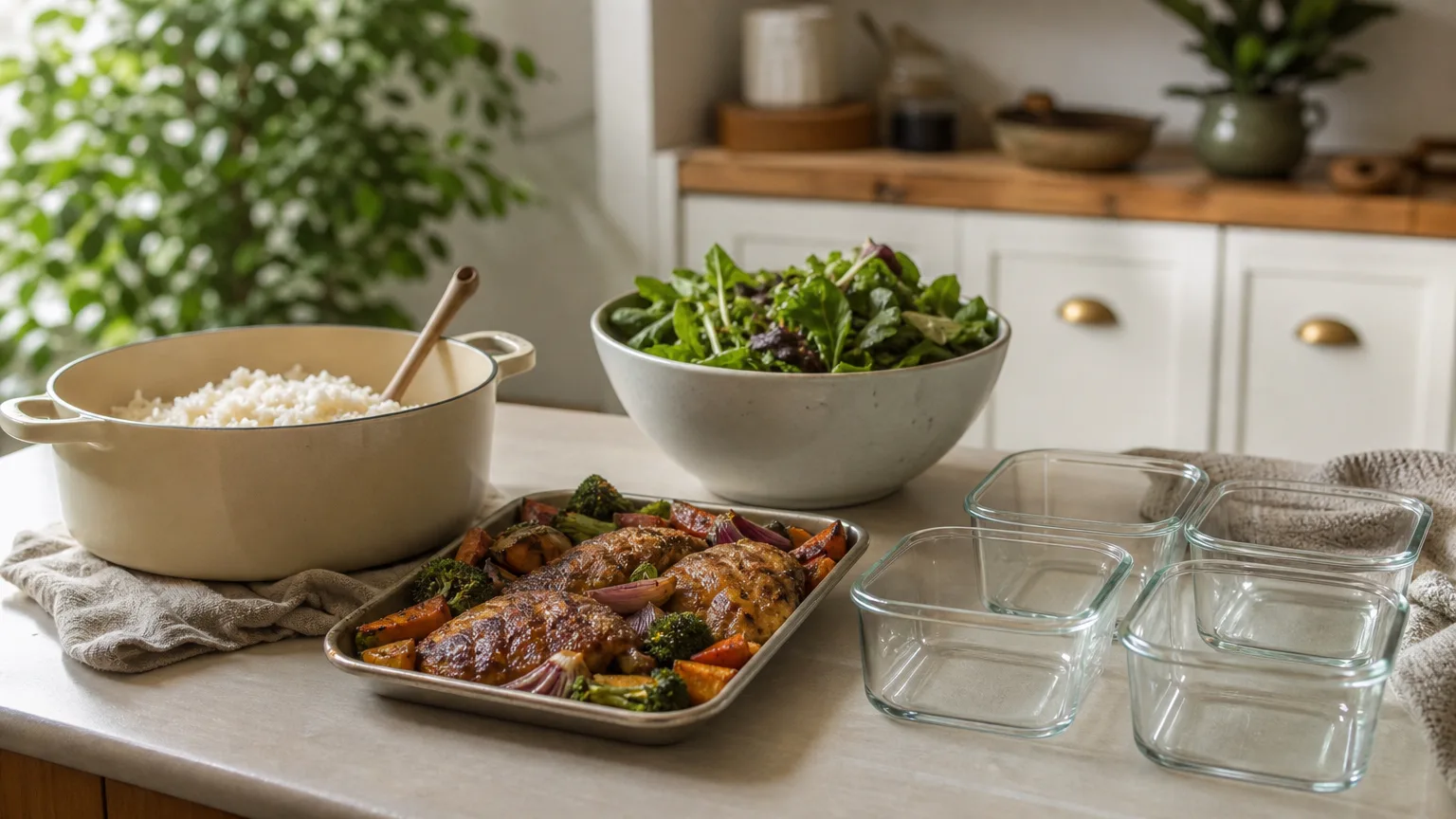
BiteTracker: best value for logging, planning and cooking
BiteTracker costs $42 a year or $8.99 a month, and there is only one plan, so every feature is included. You can describe a meal in a sentence, snap a photo, scan a barcode or search, and copy meals from earlier days. A meal calendar lets you plan the week, with calories and protein adding up for each day, and the planned ingredients can go straight to Instacart. The recipe book lists macros for every dish, you can import your own recipes from a link, and the weekly report compares your weight trend with what your log predicted, then suggests an updated target.
It runs on iPhone, Android and the web, syncs with Apple Health and Health Connect, and on iPhone a Live Activity puts calories, protein and one-tap meal buttons on the lock screen. Discounts make it cheaper still: seasonal promotions and some account offers take 20 percent off, and people aged 24 and under get 50 percent off the first year, which is $21 for an annual plan.
- Best for: people who want fast logging plus meal planning and recipes, at one of the lowest annual prices.
- Limits: there is no free tier after the trial, there is no automatic import from MyFitnessPal, and it tracks the main label nutrients (fiber, sodium, sugar, saturated fat and cholesterol) rather than dozens of vitamins and minerals.
MyFitnessPal: the biggest database, with features spread across tiers
MyFitnessPal's free tier, which shows ads, covers food and exercise logging, saved meals, copying meals and importing recipes from the web. Barcode scanning has needed Premium since 2022, as do Meal Scan photo logging and voice logging, all in the mobile apps only. Premium is $79.99 a year or $19.99 a month. Meal plans with grocery lists that connect to delivery services need Premium+, at $99.99 a year.
Its strengths are scale and connections. The database is community-built, with entries MyFitnessPal has reviewed marked by a check, and it lists millions of foods. It also connects with more than 40 fitness apps and devices. In March 2026 it announced it had bought Cal AI.
- Best for: people who want the largest food database and lots of device integrations.
- Limits: the fastest logging methods are paid, and meal planning is in the top tier.
Cronometer: best for micronutrients
Cronometer's free tier is unusually generous: it tracks up to 95 nutrients, includes unlimited barcode scanning, and runs on the web as well as iOS and Android, though it shows ads and limits charts to the last seven days. Gold, at $59.99 a year or $10.99 a month, removes ads and adds photo logging, typed or spoken meal descriptions and recipe import from a link.
Its food data is the main draw. Cronometer says its nutrition information comes from lab-analyzed sources such as the USDA and NCCDB, not crowdsourced entries, and that submitted foods are verified. We did not find a meal planner in its feature list.
- Best for: people who want vitamins, minerals and other detail beyond the main label nutrients.
- Limits: no meal planning, and the faster logging methods need Gold.
MacroFactor: best for adaptive calorie targets
MacroFactor costs $71.99 a year, $47.99 for six months or $11.99 a month, with a seven-day trial and no free tier or ads. Its standout feature is an expenditure estimate that updates from your weight trend and intake, adjusting your targets each week. Logging is fast and fully included: photo, typed or spoken descriptions, barcode and label scanning, quick add and copying whole days.
It is a mobile app, available on iPhone, iPad, Apple Silicon Macs, Apple Watch and Android, but it says there is no desktop or web version right now. We did not find a meal planner in its feature list.
- Best for: data-minded people who want weekly target changes done for them.
- Limits: no web app, no meal planning, and a higher price than BiteTracker or Cronometer Gold.

Noom and WeightWatchers: coaching programs, not just trackers
Noom and WeightWatchers sell programs built around lessons, coaching and community, with food logging inside. Noom Weight costs $209 a year, billed upfront, or $70 a month, after a short trial. It logs food by search, barcode, photo and voice alongside psychology-based daily lessons. It is mobile-only, and Noom also sells separate GLP-1 medication programs at much higher prices.
WeightWatchers Core costs $12 a month on a 12-month plan, or $144 a year, and $23 to $24 month to month. It tracks Points rather than calories by default, and shows calories only if you turn them on. Logging includes an AI food scanner, barcode scanning and recipe import from the web, and its grocery lists connect to Instacart. Its website no longer has a food diary, so tracking happens in the app.
- Best for: people who want structure, lessons or group support more than a plain tracker.
- Limits: both cost more than most trackers, neither has a web diary, and WeightWatchers uses Points rather than calories by default.
Lose It!: the simplest calorie budget
Lose It! Basic is free and shows ads, which a one-time purchase can remove. It gives you a personal daily calorie budget and a large food database, and there is a web diary as well as the apps. Premium, at $79.99 a year before in-app offers, adds Snap It photo logging, Say It voice logging, logging food ahead of time and custom goals. Lose It! says barcode scanning is moving into Premium, so some free members still have it and others do not. A lifetime plan costs $299.99.
Its strength is simplicity: a clear calorie budget for weight loss, without much else to set up.
- Best for: people who want a straightforward weight-loss budget.
- Limits: photo, voice and, increasingly, barcode logging are paid, and there are no built-in meal plans.
Cal AI and SnapCalorie: photo-first logging
Cal AI is built around one action: take a photo of your food. It also scans barcodes and accepts descriptions. You need a subscription to see results, there is a three-day trial, and its prices are shown only in the app rather than on its website. Its own FAQ describes it as about 80 percent accurate. MyFitnessPal announced in March 2026 that it had bought Cal AI, which still runs as a separate app.
SnapCalorie takes a similar approach and uses the depth sensor on recent iPhone Pro models to estimate portions; it says its estimates average about 15 percent error. Its free tier includes a few AI photo logs a day, and the App Store lists Premium at $149 a year or $19.99 a month, alongside lower-priced offers.
Both suit people who want the lightest possible logging habit and are happy to check portions themselves. Our guide to AI photo calorie tracking accuracy covers what a photo misses.
- Best for: photo logging with minimal setup.
- Limits: Cal AI's prices are not published, and we found no in-app meal planning in either.
Other calorie trackers worth a look
Nine more apps that come up often, with what sets each apart:
- MyNetDiary: an ad-free free tier with barcode scanning, a shopping list and a web version, and a staff-verified food database. Premium is $59.99 a year and adds photo logging and a meal planner.
- Carb Manager: built for keto, with net carbs and ketone tracking. Barcode scanning is free; Premium, at $39.99 a year, adds photo and voice logging, recipe import and meal plans.
- Carbon Diet Coach: adaptive weekly macro coaching that explains its changes, with AI logging, quick add and copying meals in every plan. It costs $99.99 a year or $11.99 a month, with a 7-day trial, no free tier, no ads and no meal plans.
- FatSecret: a free core app with barcode scanning and a database it says is entirely human-verified. Photo logging, voice logging and the meal planner are Premium, priced in the app.
- Yazio: intermittent fasting tools and a large recipe library. Photo logging and meal planning are in Yazio Pro, priced in the app, and there is no web version.
- Lifesum: guided programs and meal plans with shopping lists, plus chat-style logging by photo, voice or text in Premium. There is no web diary, and Premium is priced in the app.
- Foodvisor: long known for photo food recognition. The free tier is a manual diary with ads; photo analysis and text logging are Premium, priced in the app, and there is no web version.
- Google Health, formerly Fitbit: free food logging with search and barcode scanning, next to your sleep and activity data. Premium, at $9.99 a month, adds a Gemini-based coach that can log food from text or voice, but the coach needs a Fitbit or Pixel Watch.
- Samsung Health: entirely free food logging with barcode scanning, built for Galaxy phones and watches. It has no AI photo logging, and meal planning lives in the separate Samsung Food app.
How to choose the right calorie tracker
Start with what you will use every day, not with the longest feature list:
- You only want to log, and you do not want to pay: MyNetDiary's free tier has no ads and includes barcode scanning, as do Cronometer's, FatSecret's and Google Health's. On a Galaxy phone, Samsung Health is entirely free.
- You want detailed nutrients: Cronometer.
- You want targets that adjust themselves: MacroFactor or Carbon Diet Coach.
- You eat keto or low-carb: Carb Manager.
- You want lessons, coaching or group support: Noom or WeightWatchers.
- You want fast logging, meal planning, recipes and grocery ordering in one plan at a low price: BiteTracker.
- You are 24 or under: BiteTracker's young-user offer makes the first year $21.
- Then run a short test. Our guide to the fastest calorie tracking apps has a one-day speed test, and the cheapest calorie tracking apps ranks every plan by price.
Frequently asked questions
What is the best calorie tracking app in October 2026?
It depends on what you need. We recommend BiteTracker for fast logging, meal planning and recipes in one plan at $42 a year. Cronometer is best for micronutrient detail, MacroFactor and Carbon Diet Coach for adaptive targets, and MyFitnessPal for the largest food database. We make BiteTracker, so try two apps before deciding.
What is the best free calorie tracking app?
MyNetDiary's free tier is one of the most generous: no ads, free barcode scanning and a web version. Cronometer's free tier adds up to 95 nutrients but shows ads. Samsung Health is entirely free on Galaxy phones, and Google Health keeps food logging and barcode scanning free. In MyFitnessPal barcode scanning is paid, and Lose It! is moving it to Premium.
Is BiteTracker better than MyFitnessPal?
For many people it is better value. BiteTracker's single $42-a-year plan includes AI logging, barcode scanning and a meal calendar with Instacart ordering. In MyFitnessPal, barcode and photo logging need Premium at $79.99 a year, and meal planning needs Premium+ at $99.99. MyFitnessPal has a free tier and a larger food database.
Are Noom and WeightWatchers worth it compared with a calorie tracker?
They are programs with lessons, coaching and community, and they cost more: Noom Weight is $209 a year and WeightWatchers Core is $144 a year. If you mainly want to log food and see calories and protein, a tracker such as BiteTracker, at $42 a year, does that for less.
Which calorie tracker is most accurate?
Accuracy depends more on how you log than on the app. Barcode scans, saved recipes and weighed portions are the most accurate methods in any tracker. Among databases, Cronometer emphasizes lab-analyzed, verified data, while MyFitnessPal's is mostly community-built, with reviewed entries marked.
Try BiteTracker for $42 a year
AI food logging, barcode scanning, a meal calendar, a recipe book with macros and Instacart ordering, all in one subscription, with 50% off the first year for ages 24 and under.
Sources
- MyFitnessPal Premium, MyFitnessPal
- Cronometer Gold, Cronometer
- MacroFactor, MacroFactor
- Lose It! Membership Tiers & Pricing, Lose It! Help Center
- FAQ, Cal AI
- MyNetDiary FAQ, MyNetDiary
- Carb Manager Premium, Carb Manager
- Carbon Diet Coach plans and FAQ, Carbon Diet Coach
- How much does Noom cost?, Noom
- WeightWatchers plans, WeightWatchers
- fatsecret Premium, fatsecret
- SnapCalorie: AI Calorie Counter, Apple App Store (US)
- How much does the Foodvisor subscription cost?, Foodvisor Help Center
- Fitbit is becoming Google Health, Google
- Samsung Health, Samsung
This article is general information, not medical advice. If you have a health condition, talk to your doctor or a registered dietitian before changing how you eat.