Does alcohol stop weight loss? How to fit drinks into a calorie deficit
Alcohol does not stop weight loss by itself, but it makes a deficit harder to keep. A standard drink has about 100 calories from alcohol alone, and people tend to eat more when they drink. Counting the drinks keeps them inside your target.
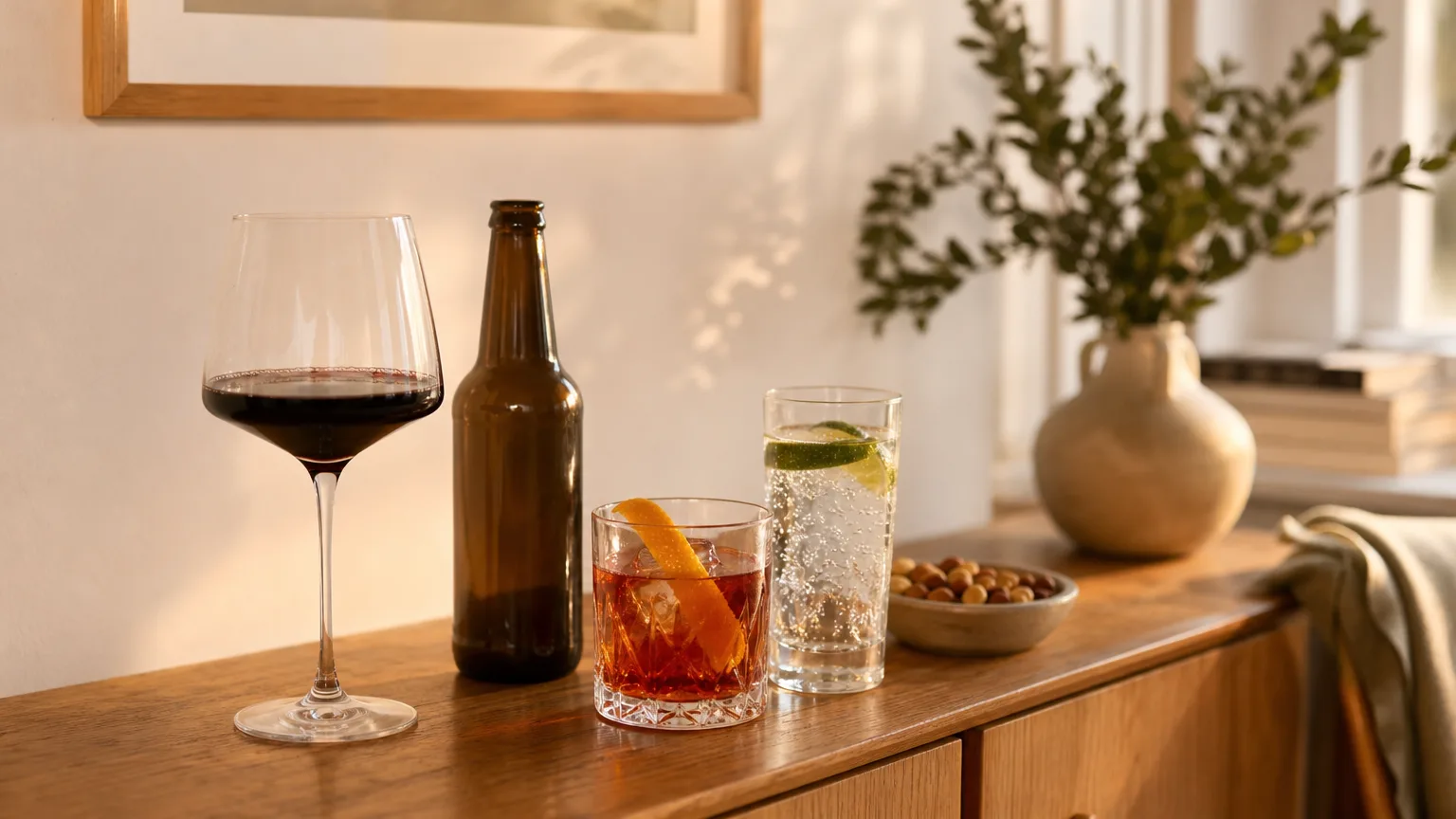
- Alcohol has 7 calories per gram. A standard drink carries about 100 calories from the alcohol alone, before any mixer or sugar.
- In studies, people eat more food when they drink, not less, so a drink often costs more than its own calories.
- You can drink and still lose weight if the drinks fit inside your calorie target. Logging them as you go is what makes that work.
Plan drinks like any other food
Three steps let you drink at a party without losing the week.
Decide before you start
Pick a number of drinks before the evening begins and fit them into the day's target. A plan made at 6 p.m. is easier to keep than one made at the third drink.
Choose lower-calorie drinks
Light beer, hard seltzer, wine spritzers and spirits with soda water are about 85 to 135 calories each. Sweet, creamy and frozen cocktails run about 250 to 350.
Log each drink as you have it
Add each drink when you pour it, not the next morning. Measure what your usual glass holds once, so the pours you log match the pours you drink.
Does alcohol stop weight loss?
Not by itself. Weight loss depends on eating fewer calories than you burn over weeks, and alcohol is one more source of calories. It has 7 calories per gram, nearly as many as fat, so drinks add up quickly. If they fit inside your target, you can drink and still lose weight.
The catch is that alcohol rarely arrives alone. It brings mixers, snacks and weaker resolve, and in studies of people trying to lose weight, heavier drinking goes along with smaller results. In the Look AHEAD trial of adults with type 2 diabetes, people in the lifestyle program who did not drink had lost 5.1 percent of their weight after four years, compared with 2.4 percent for consistent heavy drinkers.
How many calories are in alcohol?
A US standard drink holds 14 grams of pure alcohol: 12 ounces of regular beer, 5 ounces of wine or 1.5 ounces of 80-proof spirits. At 7 calories per gram, that is about 100 calories from the alcohol before anything else is added. Sugar in the drink and the mixer add the rest.
Pours at home and in bars are often bigger than standard, and many cocktails hold more than one standard drink. The figures below are typical servings from USDA data.
| Drink | Serving | Calories | Standard drinks |
|---|---|---|---|
| Hard seltzer | 12 fl oz | 86 | 0.8 |
| Light beer | 12 fl oz | 104 | 0.8 |
| Regular beer | 12 fl oz | 155 | 1.0 |
| Higher-alcohol beer | 12 fl oz | 209 | 2.0 |
| Hard cider | 12 fl oz | 202 | 1.0 |
| Sparkling wine | 5 fl oz | 113 | 1.0 |
| White wine | 5 fl oz | 123 | 1.1 |
| Red wine | 5 fl oz | 128 | 1.1 |
| Vodka, gin, rum or whiskey | 1.5 fl oz | 97 | 1.0 |
| Cream liqueur | 1.5 fl oz | 133 | 0.6 |
| Vodka and soda | 7.5 fl oz | 133 | 1.4 |
| Gin and tonic | 7.5 fl oz | 189 | 1.4 |
| Rum and cola | 7.5 fl oz | 200 | 1.3 |
| Margarita | 7.5 fl oz | 275 | 1.3 |
| Eggnog with alcohol | 8 fl oz | 271 | 1.0 |
Why drinking makes it harder to eat less
Alcohol tends to add food on top of its own calories. A review of 22 studies found that people did not eat less to make up for the calories in a drink. Pooling 12 of them, food intake was about 80 calories higher and total intake about 260 calories higher with alcohol than with a non-alcoholic drink. The studies were in adults aged 18 to 37, and the effect varied between them.
In a weight loss program of 283 adults, people who drank more at the end of treatment also ate more food, not counting the drinks. Cutting back on alcohol was linked to more weight loss in people who scored high on impulsivity, who may be the most likely to overeat once they have been drinking.
There is a practical side too. Drinks often come with salty snacks, they make a plan easier to forget, and a late night out often ends with food you would not have chosen at dinner.
Does your body stop burning fat when you drink?
For a few hours, it burns less of it. Your body treats alcohol as a fuel to clear first. In a small study of eight men given 24 grams of alcohol, about 1.7 standard drinks, the body's use of fat for fuel fell by 73 percent in the hours afterward. Very little of the alcohol was turned into fat; most was converted to acetate, which the body burned in place of fat.
In practice, fat from the food you eat with a drink is more likely to be stored that evening. Over a week, though, the total still decides the result. If your intake, drinks included, stays below what you burn, that stored fat gets used later. That is why counting the drinks matters more than avoiding them on principle.
How to fit alcohol into a calorie deficit
You do not have to give up drinking to lose weight. A few habits keep drinks inside your target.
- Budget for it. If you plan two glasses of wine on Saturday, set aside about 250 calories, and take them from snacks rather than from protein.
- Choose drinks with fewer calories: light beer, hard seltzer, a wine spritzer, or a spirit with soda water or a diet mixer.
- Alternate each drink with a glass of water or sparkling water.
- Eat a meal with protein first, so the snack table is less tempting.
- Pour your own drinks into a smaller glass, so you know the size.
- Set a time for your last drink of the evening.
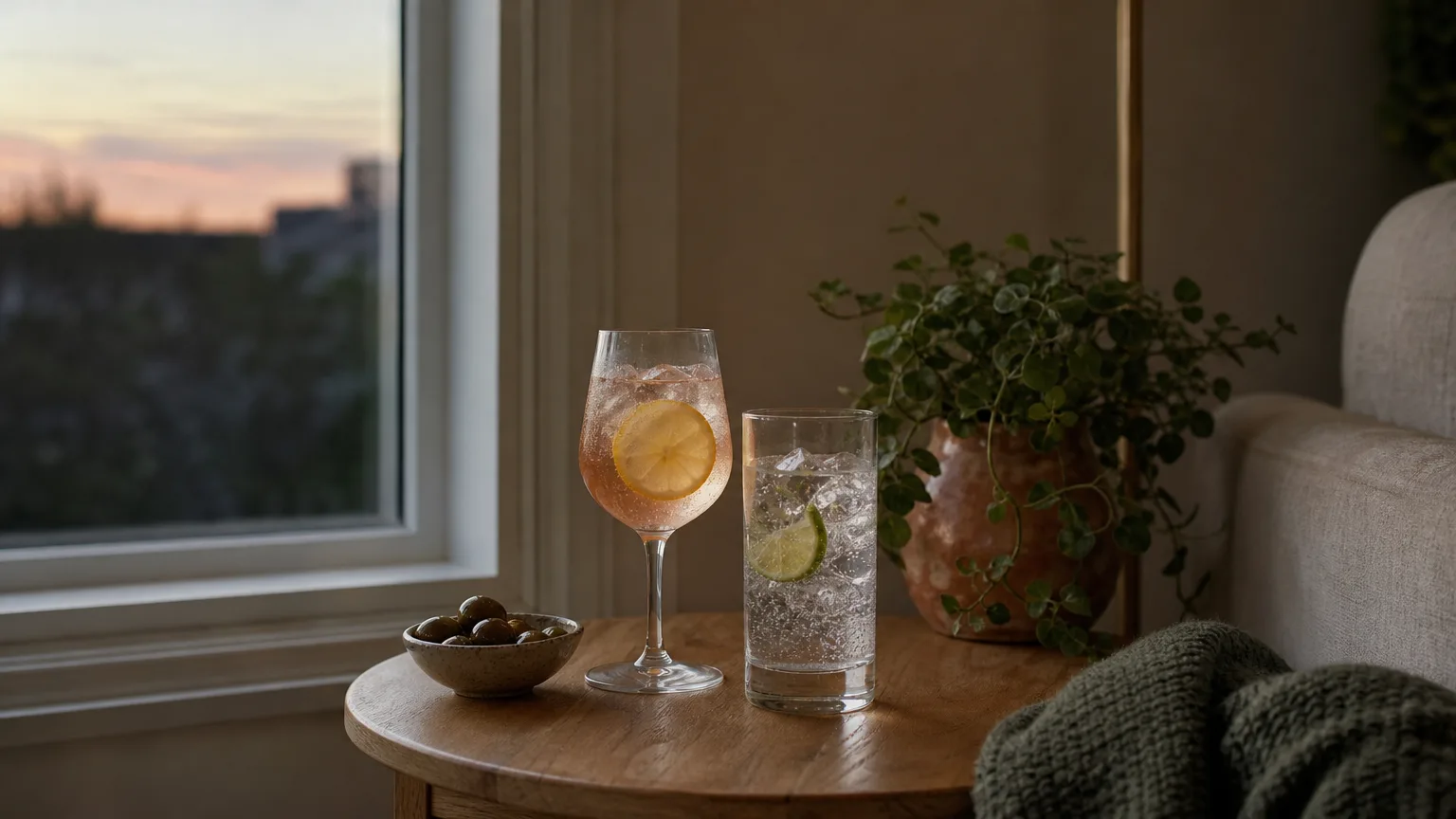
How to log drinks accurately
Most mistakes in logging drinks come from pour size. A glass of wine poured at home is often bigger than 5 ounces, and a mixed drink can hold more than one shot: the USDA's typical gin and tonic contains about 1.4 standard drinks. Measure your usual glass once with a measuring cup, and you will know what you are really logging.
For cocktails, log the spirit and the mixer separately if there is no close match, or use the NIAAA's alcohol calorie calculator. Log drinks as you have them; by the end of a party, few people remember whether it was three or four. For more on drinks and other easy-to-miss extras, see our guide to hidden calories.
Should you stop drinking to lose weight?
You do not have to. In long-term studies, light to moderate drinking is not consistently linked to weight gain, while heavy drinking is. Cutting back still makes sense if drinks take up a large share of your calories, if drinking often leads to late-night eating, or if your weight loss has stalled and drinks are a regular part of your week.
Weight is not the only reason to think about it. If you are pregnant, take medication that interacts with alcohol, or have a health condition that alcohol affects, those come first, and your doctor is the right person to ask.
Count the drinks, then check the trend
The simplest test is your own data. Log every drink for two weeks, then compare your average calories and weight trend in weeks with more drinks and weeks with fewer. If your drinking weeks run several hundred calories higher once the food around the drinks is counted, that is a clear place to start.
In BiteTracker, describe drinks in a sentence, like 'two 6-ounce glasses of red wine', or scan the barcode on a can or bottle. The weekly report shows your average calories next to your weight trend, so you can see what the weekend's drinks cost.
Frequently asked questions
Does alcohol stop fat loss?
Not on its own. While your body is clearing alcohol, it burns less fat, so fat from food eaten alongside is more likely to be stored that evening. Over a week, your total calories, drinks included, still decide whether you lose fat.
How many calories are in a glass of wine?
A 5-ounce glass of red or white wine has about 120 to 130 calories, according to USDA data. Larger pours of 6 to 8 ounces are about 150 to 200 calories, and home pours are often bigger than 5 ounces.
What is the lowest-calorie alcoholic drink?
Among common choices, hard seltzer, light beer, a wine spritzer and a spirit with soda water are the lowest, at about 85 to 135 calories in typical servings. Sweet, creamy and frozen cocktails are the highest, often 250 calories or more.
Can you drink alcohol and still lose weight?
Yes, if the drinks fit inside your calorie target and do not lead to extra eating. Plan the number of drinks ahead, log each one, and check your weekly weight trend to make sure the plan is working.
Log drinks in a sentence in BiteTracker
Describe what you poured, like 'two 6-ounce glasses of red wine', or scan the barcode on the can, and BiteTracker adds the calories to your day.
Sources
- What Is A Standard Drink?, National Institute on Alcohol Abuse and Alcoholism (NIH)
- FoodData Central, U.S. Department of Agriculture
- Effect of alcohol consumption on food energy intake: a systematic review and meta-analysis, Kwok A et al., British Journal of Nutrition, 2019
- De novo lipogenesis, lipid kinetics, and whole-body lipid balances in humans after acute alcohol consumption, Siler SQ et al., American Journal of Clinical Nutrition, 1999
- Alcohol Consumption and Obesity: An Update, Traversy G, Chaput JP, Current Obesity Reports, 2015
- Alcohol Intake and Weight Loss During Intensive Lifestyle Intervention for Adults with Overweight or Obesity and Diabetes, Chao AM et al., Obesity, 2019
- The relationship of alcohol use to weight loss in the context of behavioral weight loss treatment, Kase CA et al., Appetite, 2016
This article is general information, not medical advice. If you have a health condition, talk to your doctor or a registered dietitian before changing how you eat.