Why the scale goes up when you are in a calorie deficit
You ate well all week and the scale went up two pounds. Gaining weight in a calorie deficit like this is almost never fat. Here is what moves your weight from day to day, and how to read the number without letting it run your week.
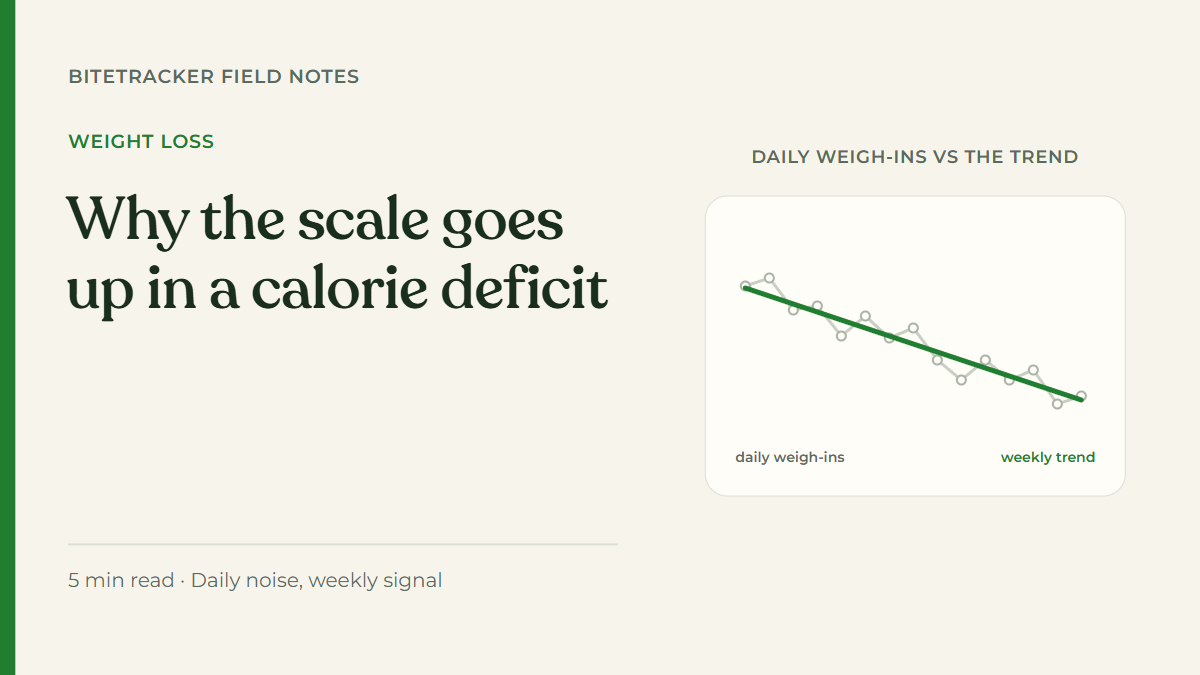
- Day-to-day swings of two to four pounds are normal and mostly water, salt, stored carbohydrate and food still being digested.
- A pound of body fat stores roughly 3,500 calories. Gaining two pounds of fat overnight while in a deficit is not possible.
- Compare weekly averages. If this week's average is lower than it was two or three weeks ago, the deficit is working.
Weigh often, judge rarely
More weigh-ins make the scale less stressful, not more, because no single number gets to decide anything.
Weigh the same way each time
First thing in the morning, after the bathroom, before eating or drinking, in similar clothing. This removes the biggest sources of avoidable noise, like a large meal or a bottle of water, from the number.
Weigh three or more times a week
A single weekly weigh-in can land on a high day and hide two weeks of progress. Several weigh-ins let you take an average, and averages are far steadier than any one reading.
Decide weekly, not daily
Pick one day to look at the trend and make decisions. On every other day, the number is just data. This one rule stops most of the frustration that makes people quit.
Why am I gaining weight in a calorie deficit?
If the scale goes up while you are eating in a calorie deficit, it is almost always water and food weight, not fat. Salt, carbohydrates, a late meal, hard training, hormones and poor sleep can each add one to three pounds overnight. That weight leaves within days, and the downward trend underneath carries on.
Your scale weighs everything at once: bone, muscle, fat, water, food in transit and the glass of water you had an hour ago. Fat changes slowly. Almost everything else can change by pounds in a day, which is why single weigh-ins are so misleading.
What makes your weight go up from one day to the next
These are the usual suspects when the number jumps. Often two or three stack up on the same morning.
- Salt: a salty restaurant or takeout meal makes the body hold extra water for a day or two.
- Carbohydrates: your body stores carbs with roughly 3 grams of water per gram, so a higher-carb day after a lower-carb stretch often adds a pound or two.
- Food in your gut: a large or late dinner is still being digested the next morning. Constipation adds weight too.
- Hard training: sore, repairing muscles hold water, especially after a new workout or a long run.
- Hormones: many women see water weight rise in the days before their period.
- Sleep and stress: short nights and stressful weeks often show up as water retention.
Can you gain fat in a calorie deficit?
Not if you are truly in a deficit. A pound of body fat stores roughly 3,500 calories, so gaining two pounds of fat overnight would mean eating about 7,000 calories more than you burned that day. A two-pound jump after a normal day is water and food weight, and it leaves as quickly as it arrived.
The catch is the word truly. A deficit on paper is not always a deficit in practice. If your weekly average has risen for two or three weeks in a row, the likelier explanation is that intake is higher than the log shows, often from hidden calories in oils, sauces and drinks or restaurant meals that are hard to estimate.
A normal week of weigh-ins, explained
Weight has a weekly rhythm for many people. A study that tracked daily weights in 80 adults found weight tends to peak on Sunday and Monday and fall through the week, and that this weekend rise is normal. The people who lost or maintained weight were the ones whose weight came back down on weekdays.
Here is what that looks like in practice. Say your average last week was 172.1 pounds. After a Saturday dinner out, Monday reads 173.2: the highest number in two weeks. By Friday you are at 171.0, and this week's average is 171.8. The scary Monday sat inside a week that went down.
- Last week's weigh-ins: 172.6, 172.0, 171.8, 171.4, 171.6, 172.2, 172.8. Average: 172.1.
- This week's weigh-ins: 173.2, 172.4, 171.6, 171.2, 171.0, 171.4, 171.8. Average: 171.8.
Is it bad to weigh yourself every day?
Not for most people. A systematic review of 17 studies found that regular self-weighing was linked with more weight loss and was not linked with depression, anxiety or other adverse psychological effects. Daily weighing gives you more data points, which makes the average steadier.
If daily numbers still ruin your mood, weigh three times a week instead and only look at the average. If weighing feels compulsive or you have a history of disordered eating, talk to your doctor or a registered dietitian about whether to track weight at all.
When gaining weight in a calorie deficit is a real problem
One heavy day is noise. A weekly average that has gone up, or stayed flat, for three to four weeks is a signal. At that point it is worth running through the weight loss plateau checklist: check your logging, then check whether your target still fits your current weight.
Weekends are a common culprit. Five careful days and two loose ones can add up to no deficit at all, which is why tracking calories on weekends matters more than most people expect.
If you gain weight quickly along with swelling, shortness of breath or other new symptoms, or you have started a medication that may affect weight, talk to your doctor.
Keep the number in its place
The scale is a measuring tool, not a verdict. Pair it with your food log and you get the full picture: what you ate, and where your weight is heading. If the trend is falling faster or slower than you want, adjust with the steps in how to set a calorie target for weight loss, not by skipping meals after a heavy morning.
In BiteTracker, log your morning weight and look at the trend line and projection rather than the last entry. The weekly report puts your average calories next to it, so one morning never decides how the week went.
Frequently asked questions
How long does water weight last after a salty meal?
Extra water from a salty or high-carb meal usually clears within one to three days once you return to your normal eating. Drinking water as usual, eating normal meals and getting a good night's sleep is enough. There is no need to cut calories further to make it go away.
Why do I weigh more after a workout?
After a hard or new workout, muscles hold extra water while they repair, and that can show up as a pound or two on the scale for several days. It is a normal part of recovery and not fat gain. The effect usually fades as your body gets used to the routine.
Can eating too little make you gain weight?
Eating too little does not create fat. What it can do is drive hunger, lower your daily activity and lead to large rebound meals, which together can erase a deficit. A moderate deficit of about 300 to 500 calories a day is easier to keep and gives a clearer weight trend.
Why do I weigh more at night than in the morning?
By evening your body is carrying the food and drinks from the whole day, so it is common to weigh a few pounds more than you did in the morning. That is why the most useful weigh-in is first thing after waking and using the bathroom, before eating or drinking.
Let BiteTracker draw the trend for you
Log a morning weight a few times a week and BiteTracker shows the trend and projection, so one heavy morning does not undo a good week.
Sources
- Self-weighing in weight management: a systematic literature review, Zheng Y et al., Obesity, 2015
- Weight Rhythms: Weight Increases during Weekends and Decreases during Weekdays, Orsama AL et al., Obesity Facts, 2014
This article is general information, not medical advice. If you have a health condition, talk to your doctor or a registered dietitian before changing how you eat.