Weight loss plateau: how to tell if it is real and what to change
A flat week is not a weight loss plateau. A flat month might be. Here is how to tell the difference, which three things to check first, and how to adjust without slashing calories.
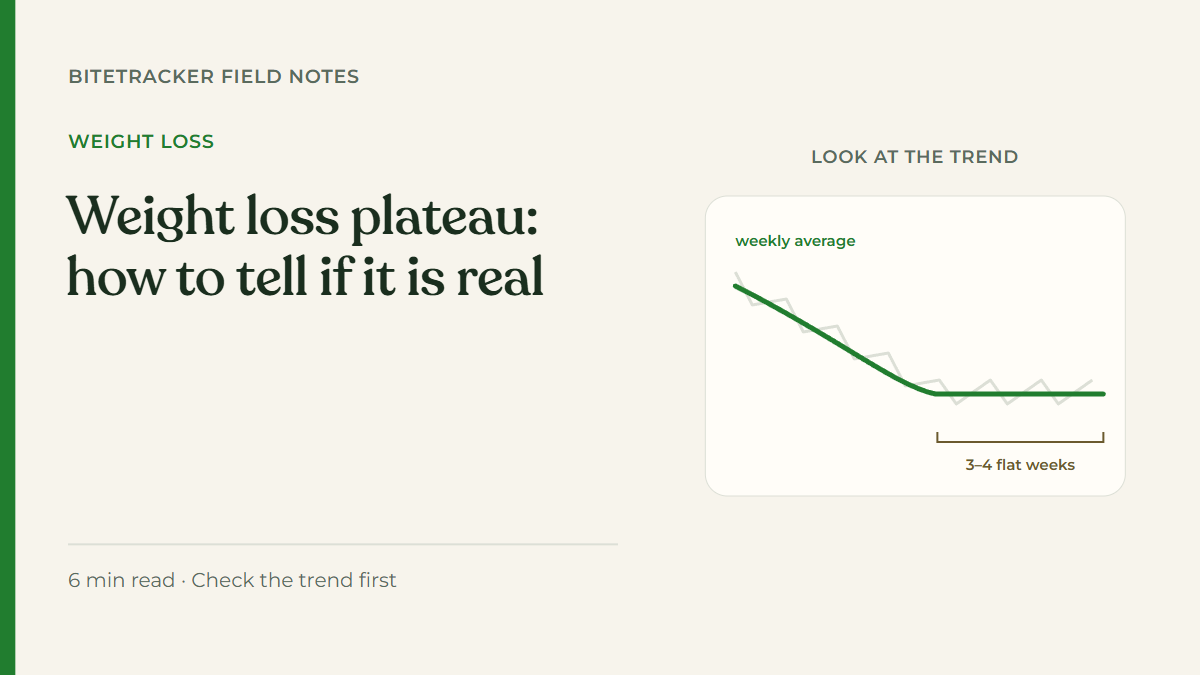
- Call it a plateau only after three to four weeks with no downward trend in your weekly average weight. Anything shorter is usually water.
- Check logging drift first: oils, sauces, drinks and weekend meals are where entries quietly shrink.
- Your maintenance calories fall as you lose weight. A target that worked 15 pounds ago may now be close to maintenance.
Check, then adjust, in that order
Most stalls are solved by the first two checks. Only change the target once they come back clean.
Confirm it is a plateau
Look at the weekly average weight, not single weigh-ins. If the average has not moved for three to four weeks while you have been close to your target most days, it is worth acting on. If it has been ten days, or the last two weeks included travel, a salty weekend or a new training plan, wait.
Audit a normal week of logging
Log everything for seven days with a little extra care: measure cooking oil, log drinks, and log weekend meals the same day. Small misses add up quickly. One unlogged tablespoon of oil a day is about 840 calories a week, which is enough to erase most of a modest deficit.
Adjust the target by a small step
If logging was accurate and the trend is still flat, lower the daily target by 100 to 150 calories or add daily movement, not both. Then give it another two to three weeks before judging. Small changes keep hunger manageable and make the result easy to read.
What is a weight loss plateau?
A weight loss plateau is a stretch of three to four weeks or more where your weekly average weight stops going down, even though you have been close to your calorie target most days. A few flat or higher days is not a plateau. Those are normal water swings that sit on top of steady fat loss.
The distinction matters because the fixes are different. Day-to-day jumps need patience, and why the scale goes up in a calorie deficit explains what causes them. A real plateau needs a check of your logging, your target and your daily movement.
How to tell if your plateau is real
Weigh in at least three mornings a week, under the same conditions, and average each week. Then compare the latest average with the one from three or four weeks ago, not with yesterday.
Say your weekly averages over six weeks were 191.0, 189.6, 188.8, 188.9, 188.7 and 188.8 pounds. The last four weeks sit within a few tenths of each other: that is a plateau worth acting on. Compare 191.0, 190.1, 190.4 and 189.5. Week three went up, but the trend is still down, so change nothing.
Give it longer if you recently started a new training plan, are comparing different points in a menstrual cycle, or had a week of travel or illness. Each of these can hold extra water for a while.
Why do weight loss plateaus happen?
When the trend genuinely stops, it is almost always one of three things, and they are worth checking in this order.
- Logging drift: portions get eyeballed more generously, bites and tastes go unlogged, and weekends fade out of the record. It happens to almost everyone after the first month.
- A target that no longer fits: a smaller body uses less energy, and research shows expenditure adapts as weight falls. Losing 20 pounds can lower maintenance by something like 100 to 200 calories a day, so the same target now produces a smaller deficit.
- Less daily movement: when people diet, they often move less without noticing. Fewer steps can quietly cancel part of the deficit.
Check your logging before you cut calories
Research on self-monitoring consistently links regular food logging with more weight loss, and the reverse is also true: when logging slips, progress usually slips with it. Before you change the target, spend one week logging as carefully as you did in week one.
Focus on the usual gaps. Hidden calories in oils, sauces and drinks are the biggest: a tablespoon of oil is about 120 calories and rarely makes it into the log. Weekends are the next, and budgeting calories across the whole week keeps Saturday from undoing Monday to Friday.
- Measure cooking oil and dressings with a spoon for one week.
- Log drinks, including milk in coffee and weekend alcohol.
- Log meals the same day instead of reconstructing them later.
- Compare your usual portions with the serving you entered.
How to break a weight loss plateau
If a careful week confirms your logging is accurate, make one small change and hold it for two to three weeks. Pick one of these, not several:
- Lower your daily target by 100 to 150 calories, staying above about 1,200 (women) or 1,500 (men).
- Add about 2,000 steps a day, roughly a 15- to 20-minute walk.
- Re-run your maintenance estimate at your new weight, as described in how to set a calorie target for weight loss, and set the target from that.
What not to do on a plateau
The instinct is to cut calories hard. That usually makes the next few weeks harder without making them faster: hunger rises, training suffers and the diet ends in a rebound. Changing several things at once also makes it impossible to tell which change worked.
Keep protein steady while you adjust. Cutting calories by cutting protein makes meals less filling and puts muscle at risk. Taking the trim from fats, drinks or snacks instead keeps you near the protein you need to lose weight.
When a maintenance break is the better move
If you have been dieting for several months and the plan feels heavy, a week or two at maintenance can help more than another cut. Raise calories to your estimated maintenance, keep logging and weighing, and expect a small rise from water and food weight. Then return to the deficit with more energy.
If your weight stays flat for several months despite careful logging, or you have other symptoms such as unusual tiredness, talk to your doctor or a registered dietitian. Some medications and health conditions affect weight.
Use the trend line as the referee
In BiteTracker, log your weight a few mornings a week and look at the trend and projection, not the latest number. Put it next to the average calories in your weekly report and the answer usually becomes clear: either you have been eating more than you thought, or the target needs a small nudge.
Frequently asked questions
How long does a weight loss plateau last?
Water-driven stalls often pass within one to three weeks. A true plateau, where the weekly average weight is flat for three to four weeks or more, usually lasts until something changes: more accurate logging, a slightly lower calorie target at your new weight, or more daily movement. Once logging is accurate and the target fits, the trend usually resumes.
Should I eat more to break a weight loss plateau?
Eating more will not make a deficit work faster, but a planned week or two at maintenance can help if you have been dieting for months and feel worn down. Expect a small rise from water and food weight, then return to a moderate deficit and judge the weekly average again after two to three weeks.
Is my metabolism broken if I stop losing weight?
No. Your body uses less energy as you get smaller, and research shows expenditure adapts to a lower intake, so the same calorie target produces less loss over time. That is normal biology, not damage. Recalculating your target at your new weight and checking your logging usually explains the stall.
Why did I lose weight fast at first and then slow down?
The first week or two of a diet often includes a drop in water and stored carbohydrate, which makes early losses look fast. After that, the scale mostly reflects fat loss, which is slower. Steady loss of up to 1 to 2 pounds a week, or less as you near your goal, is normal and not a plateau.
Tell a plateau from a slow week in BiteTracker
Log weight a few times a week and BiteTracker draws the trend and projects where it is heading, while the weekly report shows the calories you actually ate.
Sources
- Quantification of the effect of energy imbalance on bodyweight, Hall KD et al., The Lancet, 2011
- Self-monitoring in weight loss: a systematic review of the literature, Burke LE et al., Journal of the American Dietetic Association, 2011
- Body Weight Planner, National Institute of Diabetes and Digestive and Kidney Diseases (NIH)
This article is general information, not medical advice. If you have a health condition, talk to your doctor or a registered dietitian before changing how you eat.