How to track calories on Thanksgiving without counting every bite
A Thanksgiving plate usually lands between 750 and 1,350 calories, and pie, wine and appetizers can push the meal past 2,000. One big meal adds very little fat, so the goal is a quick, honest log and a normal day after, not a perfect count.
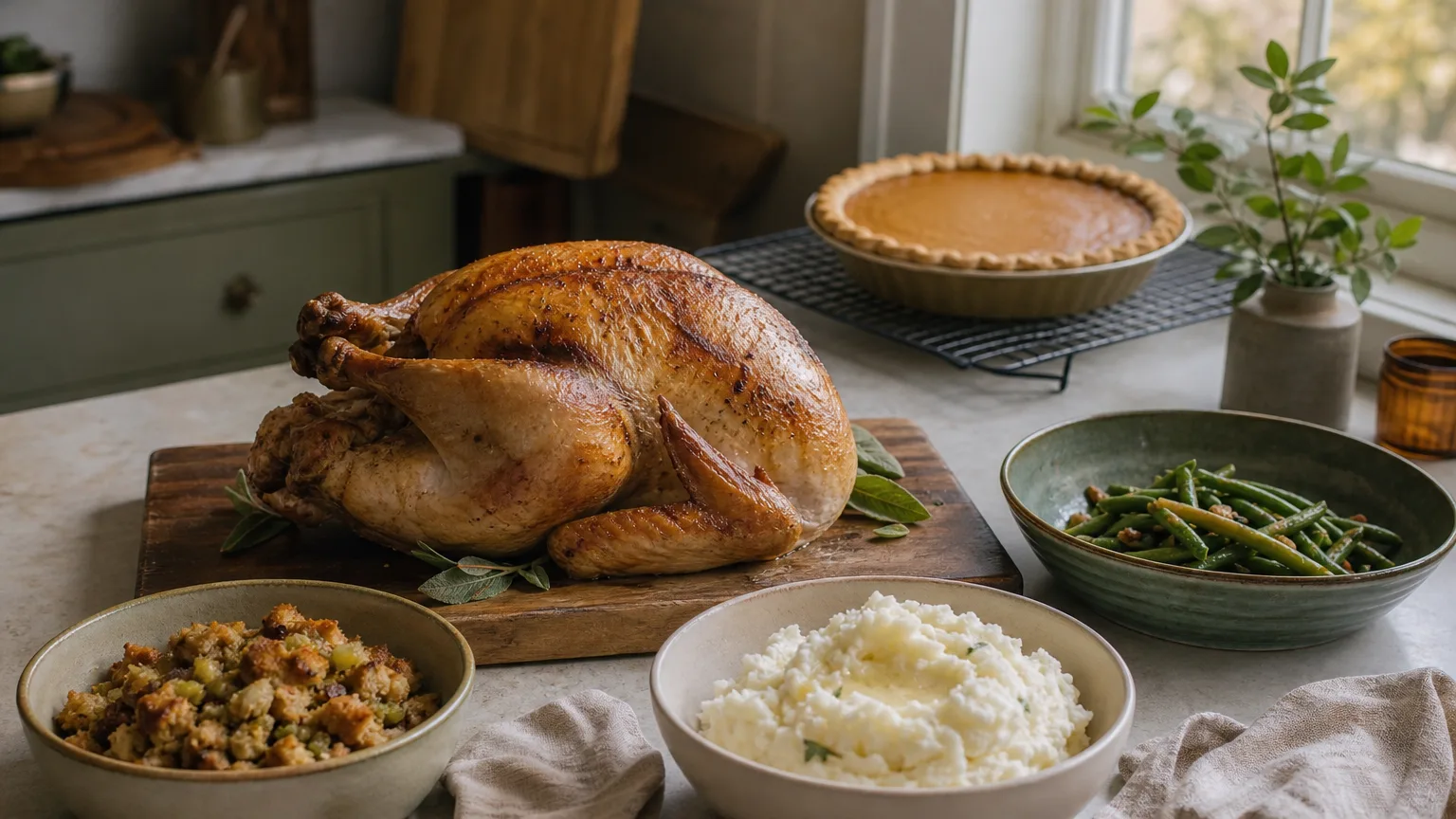
- A Thanksgiving plate is roughly 750 to 1,350 calories. With pie, wine and appetizers, the whole meal can pass 2,000.
- One big meal adds very little fat. The jump on the scale the next morning is mostly water and undigested food, and it fades within a few days.
- Log the plate by component with hand portions, round up, and go back to your usual target the next day instead of cutting back.
Three steps for an easy Thanksgiving log
A rough log of the big meal is worth more than a perfect one you never finish.
Eat a normal breakfast with protein
Skipping meals to save room usually backfires: you arrive very hungry and eat faster than you can keep track of. A breakfast with 20 to 30 grams of protein, such as Greek yogurt with fruit or eggs on toast, takes the edge off without using up much of the day's budget.
Log the plate by component
Before you eat, or right after, list what is on the plate with rough portions: a palm of turkey, a fist of mashed potatoes, a cupped hand of stuffing. Round up when unsure, and add gravy, butter and dessert as their own entries.
Go back to your usual target the next day
Do not cut calories on Friday to make up for Thursday. Eat your normal target, take a walk, and wait a few days for your weigh-ins to settle before reading anything into the scale.
How many calories are in a Thanksgiving dinner?
It depends mostly on portions, but rough numbers help. Using USDA values for typical recipes, a modest plate comes to about 750 calories: 4 ounces of white-meat turkey without the skin, half a cup each of stuffing and mashed potatoes, a little gravy and cranberry sauce, some green bean casserole and a plain roll. A generous plate, with 6 ounces of turkey with the skin, a cup each of stuffing and mashed potatoes, more gravy and a buttered roll, is about 1,350.
Dessert and drinks are where the meal grows. A slice of pumpkin pie with whipped cream adds about 440 calories, two 5-ounce glasses of wine about 250, and five butter crackers with a few small slices of cheddar before dinner about 190. Put together, a generous Thanksgiving dinner comes to roughly 2,250 calories, before breakfast or a second slice of pie in the evening.
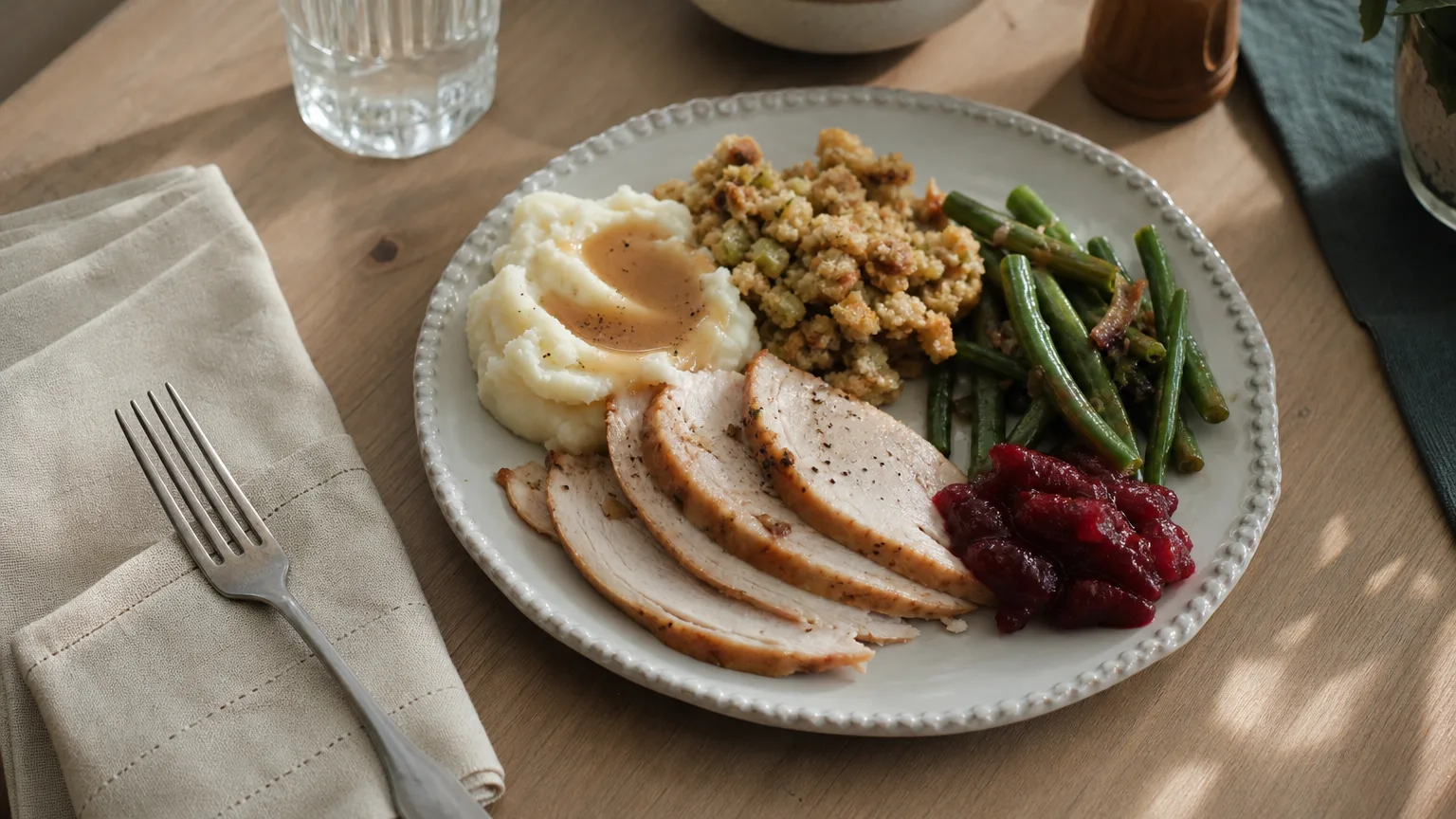
Calories in common Thanksgiving foods
Recipes vary a lot from one kitchen to the next, so treat these as starting points. Homemade versions with more butter or cream run higher, and a sweet potato casserole topped with marshmallows or a pecan crumble is well above the plain mashed sweet potatoes listed here.
| Food | Portion | Calories | Protein |
|---|---|---|---|
| Turkey, white meat, skin eaten | 3 oz | 144 | 24 g |
| Turkey, white meat, no skin | 3 oz | 118 | 24 g |
| Turkey, dark meat, skin eaten | 3 oz | 172 | 22 g |
| Bread stuffing | 1/2 cup | 177 | 3 g |
| Mashed potatoes, made with milk | 1/2 cup | 143 | 3 g |
| Poultry gravy | 1/4 cup | 29 | Under 1 g |
| Cranberry sauce | 1/4 cup | 111 | Under 1 g |
| Green bean casserole | 1/2 cup | 64 | 2 g |
| Mashed sweet potatoes | 1/2 cup | 124 | 2 g |
| Dinner roll | 1 medium | 120 | 4 g |
| Butter | 1 pat | 52 | 0 g |
| Pumpkin pie | 1/8 of a 9-inch pie | 374 | 7 g |
| Apple pie | 1/8 of a 9-inch pie | 444 | 4 g |
| Pecan pie | 1/8 of a 9-inch pie | 674 | 9 g |
| Red wine | 5 fl oz | 128 | 0 g |
Can one big meal undo your progress?
No. Fat gain comes from a surplus that lasts. Say your maintenance is about 2,200 calories and Thanksgiving comes to 3,200 once you count breakfast and a slice of pie in the evening. That is a surplus of about 1,000 calories, which by the rough rule of 3,500 calories per pound is under a third of a pound of fat.
The scale may still jump a pound or more the next morning. Salty food and extra carbohydrate both hold water, and a big meal has weight of its own until it is digested. That water usually comes off over the next few days, as our guide to why the scale goes up in a calorie deficit explains.
What does add up is the season around the meal. In a National Institutes of Health study of 195 adults, the average gain between mid-November and early January was a little under a pound, and it was still there the following fall. Our guide to avoiding holiday weight gain covers the weeks after Thanksgiving.
Should you save calories for Thanksgiving dinner?
A little, but not by skipping meals. If you fast all day, you tend to arrive at the table very hungry, and the appetizers disappear before dinner is served. A normal breakfast with protein, and a light lunch if dinner is late, keeps you in charge of the plate.
If you like to plan ahead, trim 100 to 200 calories a day for the few days before, or budget by the week rather than the day, as in our guide to tracking calories on weekends. That leaves room for pie without a day of hunger. What matters is the weekly average, not whether Thursday hit its number.
How to log a Thanksgiving plate in two minutes
You do not need a food scale at a family dinner. Log each item with a hand portion and round up when you are unsure, using the same approach as our guide to tracking macros without weighing everything.
- Turkey: a palm is about 3 to 4 ounces. Note whether you ate the skin, which adds roughly 25 calories per 3 ounces of white meat.
- Stuffing, mashed potatoes and sweet potatoes: a cupped hand is about half a cup, a fist about a cup.
- Gravy: a ladle is often a quarter to half a cup. Log it as its own entry so it is not forgotten.
- Butter on rolls or vegetables: a thumb is about a tablespoon, or about 100 calories.
- Seconds and dessert: log them when you take them, not at the end of the night.
- Drinks: count every glass. Wine poured at home is often more than 5 ounces.
Where the extra calories come from
Turkey is rarely the problem: 3 ounces of white meat without the skin is under 120 calories, with 24 grams of protein. Most of the extra comes from the rest of the day around the main plate.
- Appetizers before dinner, which often get eaten standing up and never logged.
- Second helpings of stuffing and potatoes, at roughly 140 to 180 calories per half cup.
- Pie, from about 375 calories a slice for pumpkin to about 675 for pecan.
- Drinks such as wine, beer, cider and eggnog, at roughly 125 to 270 calories each. Our guide to alcohol and weight loss has a full list.
- Leftovers eaten straight from the container later in the evening.
What to do with Thanksgiving leftovers
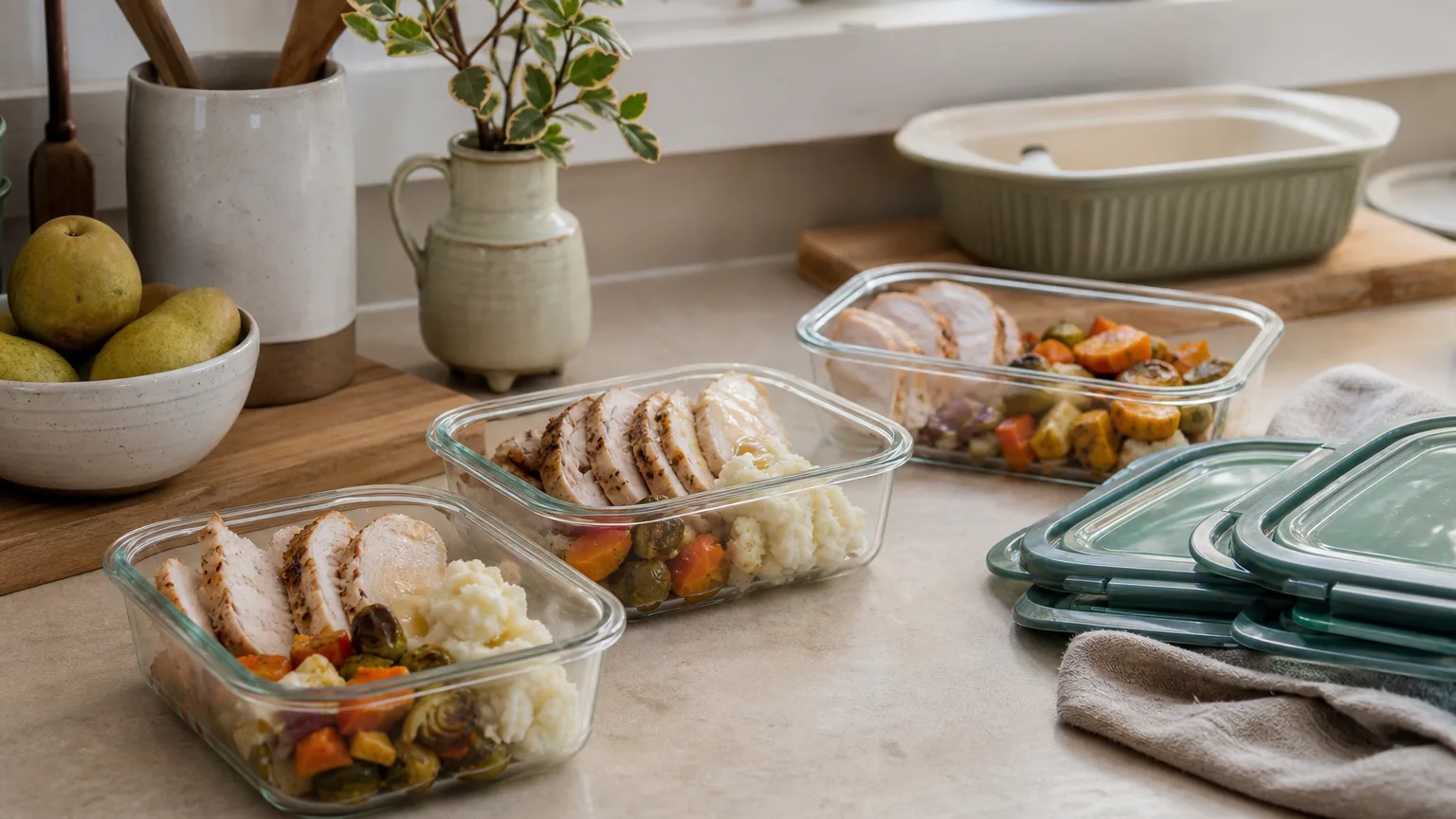
Leftover turkey is one of the easiest high-protein foods you will have all year, with about 24 grams of protein in 3 ounces. Pack it into meal-sized containers the same night, with a portion of vegetables and a smaller scoop of the richer sides, so each container is a meal you can log in one go.
USDA food safety guidance is to eat refrigerated leftovers within 3 to 4 days, so freeze what you will not get to by then. Turkey works in a grain bowl, a soup or a stir-fry, and the high-protein recipe collection lists calories and protein per serving for every dish.
The day after Thanksgiving
Go back to your usual calorie target on Friday. Cutting hard to make up for Thursday tends to lead to another big evening, and you do not need to: if you were running a 500-calorie daily deficit, a 1,000-calorie surplus is made up in about two days of normal eating. A walk with whoever is still in town helps more than a punishing workout.
Weigh in as usual, but read the trend, not Friday's number. In BiteTracker, describe your plate in a sentence or snap a photo of it, and the weekly report shows your average calories next to your weight projection, so one big meal sits in context with the rest of the week.
Frequently asked questions
How many calories are in a Thanksgiving dinner?
A typical plate of turkey, stuffing, mashed potatoes, gravy, cranberry sauce, a vegetable side and a roll is about 750 to 1,350 calories, depending on portions. With a slice of pie, a couple of glasses of wine and appetizers, the whole meal often reaches 2,000 to 2,500.
How many calories are in a slice of pumpkin pie?
About 375 calories for one eighth of a 9-inch pumpkin pie, using USDA values for a typical recipe. Apple pie is about 445 and pecan pie about 675 for the same size slice. A dollop of whipped cream adds roughly 60 to 70 calories.
How much weight can you gain from one Thanksgiving dinner?
Very little fat. Even a 1,000-calorie surplus is under a third of a pound of fat by the usual 3,500-calorie rule. The scale may read a pound or more higher the next morning because of water held with salt and carbohydrate, and that usually fades within a few days.
Should I skip breakfast before Thanksgiving dinner?
It is usually better not to. Arriving very hungry makes portions harder to manage. A breakfast with 20 to 30 grams of protein, and a light lunch if dinner is late, works better than fasting all day.
Describe your Thanksgiving plate in BiteTracker
Type the plate in a sentence, like 'turkey, a cup of stuffing, mashed potatoes with gravy and a slice of pumpkin pie', or snap a photo and check the suggested portions before you save.
Sources
- FoodData Central, U.S. Department of Agriculture
- A prospective study of holiday weight gain, Yanovski JA et al., New England Journal of Medicine, 2000
- Leftovers and Food Safety, USDA Food Safety and Inspection Service
This article is general information, not medical advice. If you have a health condition, talk to your doctor or a registered dietitian before changing how you eat.